
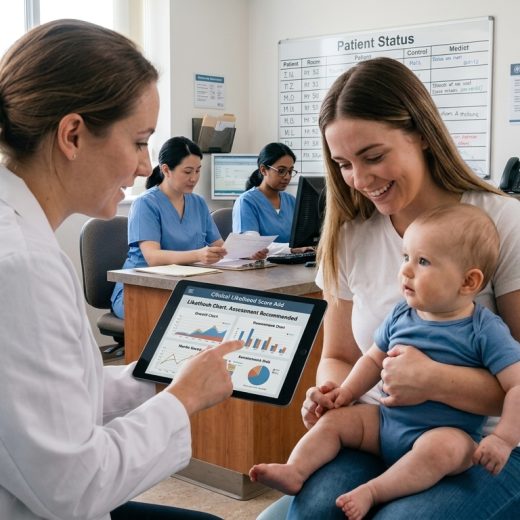
The first signs of autism appear during early childhood, yet most autistic people are not diagnosed until much later than this. Research is beginning to uncover the likelihood factors for autism, such as family history or pregnancy complications, but this research has not yet been translated into clinical practice. This research programme will use a variety of new methods, such as machine learning, to combine likelihood factors with clinical data, to improve early diagnosis. The aim will be to develop a new clinical pathway, in the first two years of life, so that children who need support can be identified earlier for assessment.
This approach will be informed by recent discoveries and extensive community engagement with both autistic people and their families, as these discoveries are directly relevant to them. For example, new findings across the world have shown that if a mother has been diagnosed with polyendocrine metabolic ovarian syndrome (PMOS, previously known as PCOS), her children are substantially more likely to be autistic. These findings also suggest that autistic women themselves are at a higher likelihood for hormonal imbalance and may benefit from screening and early diagnosis to improve their quality of life.
In addition, while an autism diagnosis remains more common in boys, especially during childhood, we now know that a lot of the early signs and difficulties are missed in girls. This programme will combine data from studies that follow children as they grow (prospective cohorts) and studies that look back at people’s early lives (retrospective cohorts), so that the earliest signs of autism can be identified. To overcome reliance on external behaviour, the study will also include detailed measures of brain development and brain function, which have been challenging to measure in infants and young children.
Finally, the programme will study brain development in the womb. This will not be done with prenatal diagnosis in mind, as this is ethically inappropriate and is contrary to our research values. Instead, the study of pregnancy will aim to inform early screening after birth.
This programme will have clinical benefits for autistic people and their families, as well as value for basic science. It will provide new answers to key questions about how biology before and after birth contributes to different developmental pathways in autism, to early brain development in general and to the rich neurodiversity of human society.
Key publication